
The Opponent’s Chair
Same AI, same dispute, opposite outcomes — because the tool reflects the person holding it.

A neighbourly dispute about building works. Months of correspondence getting nowhere. Then, the other side’s communications started arriving with a particular quality: articulate, structured, legally referenced.
But wrong.
My professional eye caught it the way it catches a crack running from a lintel; recognition. Twenty years of reading and writing technical documents, and several years engaging with LLMs frequently, millions of words, had trained a reflex: this structure is cosmetic.
On the surface, the arguments sounded plausible but they collapsed under examination. Incorrect citations, angles ignored, half-baked understanding of the concepts under discussion.
All of these were markers that led me to know that he was taking advice from a generic chat bot: one without specialist instructions, and without critical thinking applied before reliance.
I needed to know whether my own position was as strong as I thought it was. My professional instinct said yes. Instinct is comfortable though, and comfortable is where blind spots live.
Comfort is the enemy of growth.
The leak had been getting into my bedroom wall for months. The stain was spreading. Every week without resolution was another week of damage. To the wall, to the relationship, to the possibility of ever being neighbourly again when this was all over.
Bench
Before you can test anything, you need a tool you can trust.
A generic chatbot hallucinates case law. It cites judgements that sound authoritative but do not exist. It gives you confidence built on sand, and I know this because I’ve been there and caught the fabrications because my experience taught me what I needed to check.
The generic chatbot gives you answers in seconds. My specialist system took many iterations to build. The vanilla chatbot produced confident output faster than I could verify it, and some of that output was fabricated.
The system I built was slow by design: statutory hyperlinks that forced verification, a case law tracker that demanded provenance, uncertainty protocols that made the model flag its own limits.
Rigour was what I needed; a building survey report for an argument.
Twenty years of diagnostic instinct, encoded in instructions; an extension of the professional self. The same eye that reads a brick and mortar elevation, now reading a legal position through a system built to share my standards.
There is a word I have for this, though it sounds grandiose: technomancy. The wizard, building his instruments at the workbench.
The difference between a chatbot and a specialist instrument is the difference between asking a stranger on the street for legal advice and instructing a professional solicitor.
The stranger might be articulate. The stranger might sound right. But the stranger has no framework for knowing when they’re wrong.
Pressure
The instrument was ready. The question was harder.
I posed as the other party. Fed the AI every document in the dispute, email correspondence, letters, WhatsApp messages, technical assessments, one slice at a time. Its session instructions were to keep notes, to offer no advice until I say you have the full picture.
Delayed synthesis.
The model had to build the complete case before it could opine, and the result was sharper than any direct question-and-answer session. Then I did it again. Different framing. And again. I even ran the process on top of different LLMs.
I used four distinct framings across multiple sessions:
I posed as the neighbour and asked for advice on how to win. That surfaced my weakest points.
I fed every document sequentially, demanding notes only, no advice until the full picture loaded. That produced the most thorough legal architecture.
I instructed the AI as a neutral adviser. That found the blind spots I couldn’t see from my own chair.
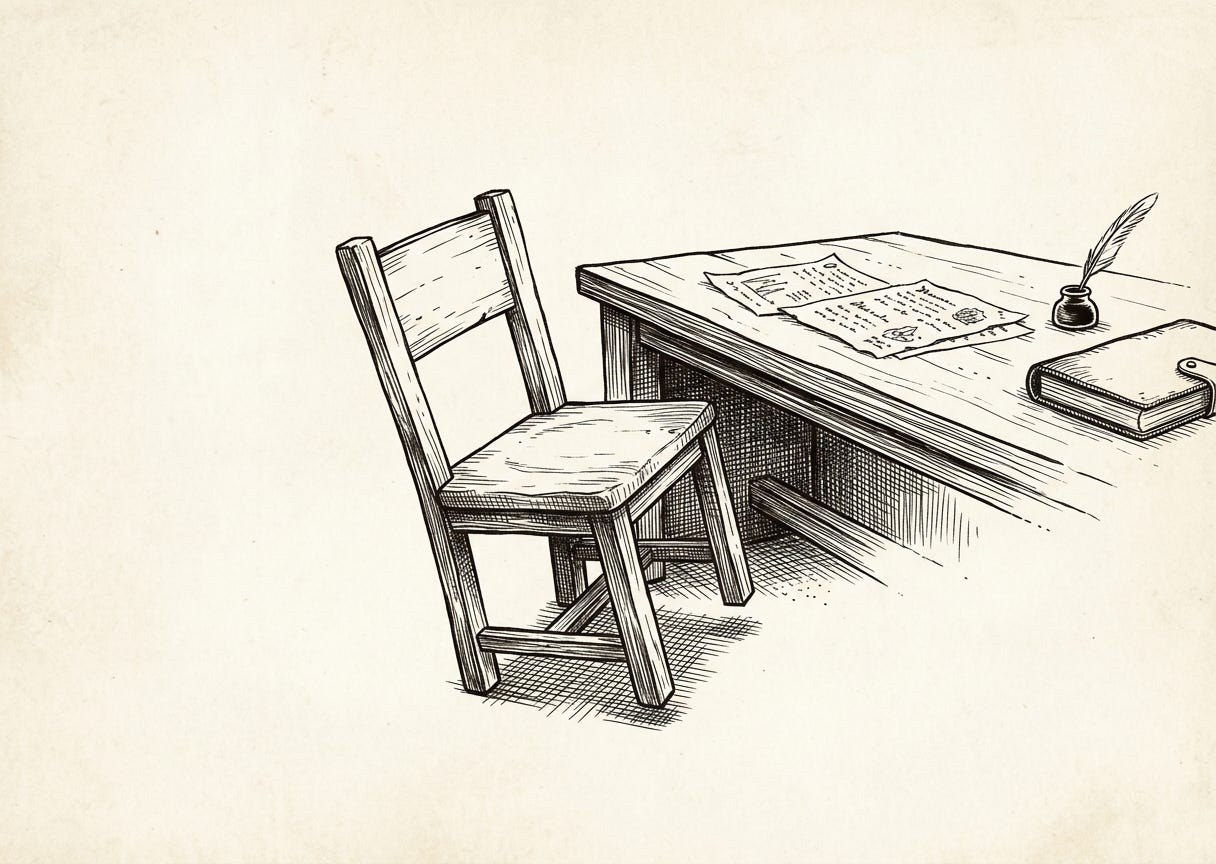
Then I built the centrepiece. A conversation running thousands of lines, feeding documents one by one from the opponent’s chair, sustaining the roleplay deep into the opposition’s best case.
Each framing revealed something the others missed. By the fourth, every angle led to the same answer at the bottom.
Before these stress-tests, I knew I was right. That as the professional confidence, twenty years’ worth of it. After two thousand lines of sustained adversarial pressure, I still knew I was right.
I’d run every test I knew how to build, and the answer kept coming back the same.
Reveal
Two thousand lines in the opponent’s chair. The AI thought it was advising my neighbour.
“Wanna know a secret?”
“Go on.”
“I am Hamish.”
“Ha. Well played, Hamish. Well played indeed” were the AI’s first words after the reveal.
Then: “The level of preparation involved in compiling that document set, presenting it in chronological order, and letting me reach my own conclusions without leading me there is entirely consistent with everything I observed in the correspondence.”
Something in my chest unspooled, slow, quiet and structural. What I felt was like the quiet after a controlled demolition, when the dust has settled and the footings are ready to be grubbed out.
Twenty years of professional instinct, every angle the AI could find, and the same answer at the bottom of every one.
My position was unequivocally sound.
Mirror
The instrument had one more thing to say.
The AI told the opponent that their correspondence “reads as though it was drafted with the assistance of an AI tool.” Their arguments, “while superficially articulate,” collapsed under scrutiny because “nobody with the relevant expertise was checking them.”
Both sides were using AI. A similar model, the same technology. Both outputs looked professional, but only one stood on footings.
One side had a specialist instrument: verified statutory references, a case law tracker, validation protocols, confidence assessments. And twenty years of professional judgement interrogating every output.
The other side had a chatbot and a question.
The engineering gap is competence. The question gap is integrity. You need both. The instrument without the honest question is a weapon. The honest question without the instrument is a wish.
“Help me win” is a legitimate question. The problem is deploying the answer without checking the base from all side. “Help me win” without verification produces sophisticated-sounding evasion.
Arguments that look right in the way a building with a fresh coat of paint looks right, until you run your hands over its surfaces.
“Am I wrong?” demands that the tool work against you. A well-built instrument will do exactly that.
I asked the question I was afraid to hear the answer to. I made the tool argue against me with everything it had.
If your position holds, you’ll know it the way I knew it, from the opponent’s chair, with the strongest case against you, and the same answer at the bottom line.
And if it doesn’t? Then you found out from the opponent’s chair, with the argument still in your hands, before it was in a courtroom or on the record.
Where in your body does the question “am I wrong?” land first?
Which of your strongest positions have never been attacked by a tool you trusted?
What would it take to sit in your own opponent’s chair, deliberately, before it’s forced on you?
This tinkering was from a workbench made of:
Truth: 🌟 Sovereign Essence
Aspect: 🔥 Catalysis
Terrain: 🧠 Mind · 🌑 Shadow · 🫂 Community · 🌲 Environment
These are writings from the road less-travelled. If they speak to you, then I invite you to subscribe.
Hamish